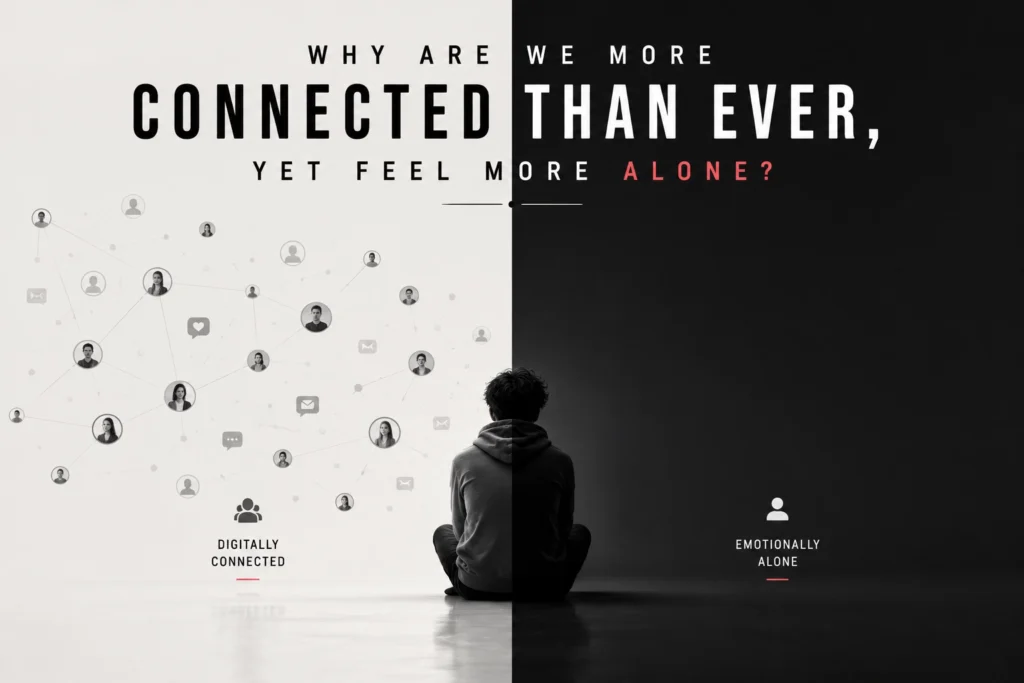
A World That Never Stops Talking
At no point in history has staying in touch been so effortless. Messages travel across continents within moments, video calls connect people separated by thousands of miles, and social media allows individuals to remain in contact with vast networks of hundreds or even thousands of others. Advances in technology have dismantled many of the obstacles that once made communication slow, difficult, and costly.
Yet despite this unprecedented level of connectivity, loneliness has emerged as a defining feature of modern life. Research conducted across various countries points to a consistent rise in feelings of emotional isolation, particularly among young adults and older populations. This raises an important paradox: if people today are more connected than ever before, why do so many still feel profoundly alone?
The Great Connectivity Revolution
The rise of the digital age has transformed the way people build and maintain relationships. Platforms like social media, messaging apps, and online forums have created opportunities that previous generations could hardly have imagined. Individuals can reconnect with friends from the past, discover others who share their passions, and remain close to family regardless of geographic distance.
Beyond this, technology has lowered the barriers to maintaining relationships. A simple text can convey that someone is being thought of. Video calls can bridge physical gaps, and online communities can offer support to those who might otherwise struggle with isolation. In these ways, digital tools have undeniably improved many aspects of how people connect with one another.
That said, ease of access doesn’t necessarily translate into emotional depth. Being able to reach more people doesn’t guarantee that the relationships formed will be meaningful or strong.
The Difference Between Connection and Relationship
A common mistake people make is equating communication with genuine connection. Actions like sending a text, liking a photo, or reacting to a post generate engagement, but they don’t necessarily foster emotional closeness. Real relationships depend on trust, openness, and substantive conversations that extend well beyond quick exchanges.
Additionally, strong relationships are built on shared experiences and genuine emotional engagement. Someone can have a massive following and still experience profound loneliness, since true fulfillment comes from the depth of connection rather than the number of contacts. As a result, many people find themselves engaged in constant digital communication while still lacking real, authentic human bonds.
This difference matters greatly. Digital connectivity simply means being able to reach others. True connection means feeling seen, appreciated, and emotionally supported.
Social Media and the Illusion of Togetherness
Social media has fostered a environment where people seem perpetually surrounded by friendships, celebrations, and thrilling moments. Users tend to post selectively chosen highlights that showcase happiness, achievement, and social engagement. This often gives the false impression that everyone else is leading a rich, socially fulfilling life.
Yet these polished portrayals can actually deepen feelings of loneliness. People often measure their own ordinary, everyday lives against the highlight reels others present online. As a result, they may come to feel more isolated or less accomplished compared to those around them.
In addition, interactions on social media tend to stay surface-level. Someone might rack up hundreds of likes on a single post, yet still have no one to turn to when facing a tough situation. This shows that being popular online doesn’t necessarily equate to having real, meaningful companionship.
The Rise of Shallow Communication
Today’s communication tends to place a premium on speed and ease. Tools like text messages, emojis, and short-form videos enable instant exchanges of information. Though efficient, these methods often leave less room for more substantial, in-depth conversations.
Truly meaningful relationships are formed through lengthy discussions, emotional honesty, and genuine attentiveness. Unfortunately, digital communication often favors fast replies over thoughtful, considered engagement. This means people may be communicating more often while actually understanding one another less.
Additionally, conversations today must compete with a constant stream of digital distractions. Notifications, emails, and endless content feeds pull attention in multiple directions, diminishing the quality of interactions. People may be physically together while mentally absorbed elsewhere, leading to relationships that feel increasingly disconnected and fragmented.
Why Loneliness Persists in an Online World
Loneliness isn’t merely about being physically alone. Rather, it stems from a lack of meaningful emotional bonds. Someone can go to social events, take part in group chats, and keep up an active online presence, yet still experience deep-seated loneliness.
Additionally, contemporary lifestyles often make it hard to maintain close relationships. Demanding work schedules, frequent moves, and a growing emphasis on individualism can erode community ties. As a result, many people find it challenging to build relationships that are both lasting and emotionally fulfilling.
The digital realm can sometimes worsen this issue. While online interactions may offer momentary comfort, they often fall short of meeting the deeper human need for true belonging and emotional intimacy.
The Disappearing Art of Meaningful Conversation
Genuine, meaningful conversation has grown scarce. Although many people communicate throughout their day, few of these exchanges involve discussions that carry real significance. Information gets shared, but fears, aspirations, doubts, and personal experiences are rarely voiced.
Nevertheless, meaningful conversations play a vital role in fostering emotional connection. They give people a sense of being truly seen, heard, and understood. Deeper bonds form when individuals move past superficial exchanges and engage in candid, vulnerable dialogue.
Additionally, meaningful conversations demand both time and focused attention. In a society that prizes productivity and nonstop activity, many struggle to make room for these kinds of interactions. As a consequence, relationships risk becoming merely practical rather than genuinely intimate.
Communities in the Age of Individualism
Throughout much of history, communities served as a cornerstone of human existence. Families resided near one another, neighbors were familiar with each other, and social life often unfolded within shared local spaces. These communities offered a sense of support, belonging, and emotional stability.
In contrast, many traditional community structures have eroded today. Frequent relocation, remote work, and growing time spent online mean people often have fewer chances to form strong ties within their local area.
Digital communities do offer real value, particularly for those connecting over shared interests or experiences. Still, online groups often can’t fully replicate the emotional depth found in face-to-face interaction. Human beings flourish when they have both connection and genuine physical presence in their lives.
The Human Need for Authentic Relationships
Human beings are fundamentally social by nature. Emotional well-being relies not just on interaction in general, but on authentic relationships marked by trust, empathy, and mutual support.
Building authentic relationships takes deliberate effort and intention. It means listening without distraction, expressing real interest in others, and remaining emotionally present during hard times. Such qualities simply can’t be fully captured through notifications or fleeting online exchanges.
Furthermore, authentic relationships often grow out of everyday moments—sharing a meal together, going for a walk, or having a deep conversation late into the night. These shared experiences build memories and emotional connections that digital interactions have difficulty replicating.
Relearning the Meaning of Connection
Addressing loneliness in the modern age doesn’t mean giving up on technology altogether. Digital tools offer incredible potential for communication and, when used with intention, can even strengthen relationships. Still, people need to recognize the difference between constant interaction and true connection.
Making this shift calls for deliberate, conscious choices. It might mean dedicating more time to family and friends, getting involved in community activities, or choosing face-to-face conversation over mindless scrolling. It could also mean cultivating spaces where honest expression and deep listening can take place.
Additionally, people should keep in mind that meaningful relationships take time to develop. Trust and emotional closeness can’t be rushed, nor can they be substituted by the size of one’s contact list or social media following.
A Future That Values Human Connection
As technology keeps advancing, society is confronted with a critical challenge: ensuring that progress in digital communication doesn’t come at the cost of emotional well-being and genuine human relationships.
Looking ahead, the focus shouldn’t be solely on refining communication technology. It should also involve fostering environments that support meaningful conversations, real communities, and authentic relationships. Ultimately, what people need isn’t simply more ways to communicate — it’s more genuine opportunities to connect.
Final Thoughts: Connected but Alone
The modern era has accomplished something remarkable, linking billions of people across nations, cultures, and continents. And yet, it has also exposed an uncomfortable reality: being digitally close to someone doesn’t always translate into emotional closeness.
Perhaps the defining paradox of our time is this: people can now reach virtually anyone, anywhere, at any moment—and still feel deeply alone.
Resolving this paradox starts with recognizing the difference between digital connection and genuine connection. One is measured in notifications, follower counts, and messages sent. The other is measured in trust, mutual understanding, and true emotional presence.
In a world that grows more online by the day, the real challenge isn’t figuring out how to reach more people. It’s learning how to form deeper, more meaningful connections with the people who genuinely matter.