Author name: adhilharis.360@gmail.com

loneliness
Uncategorized

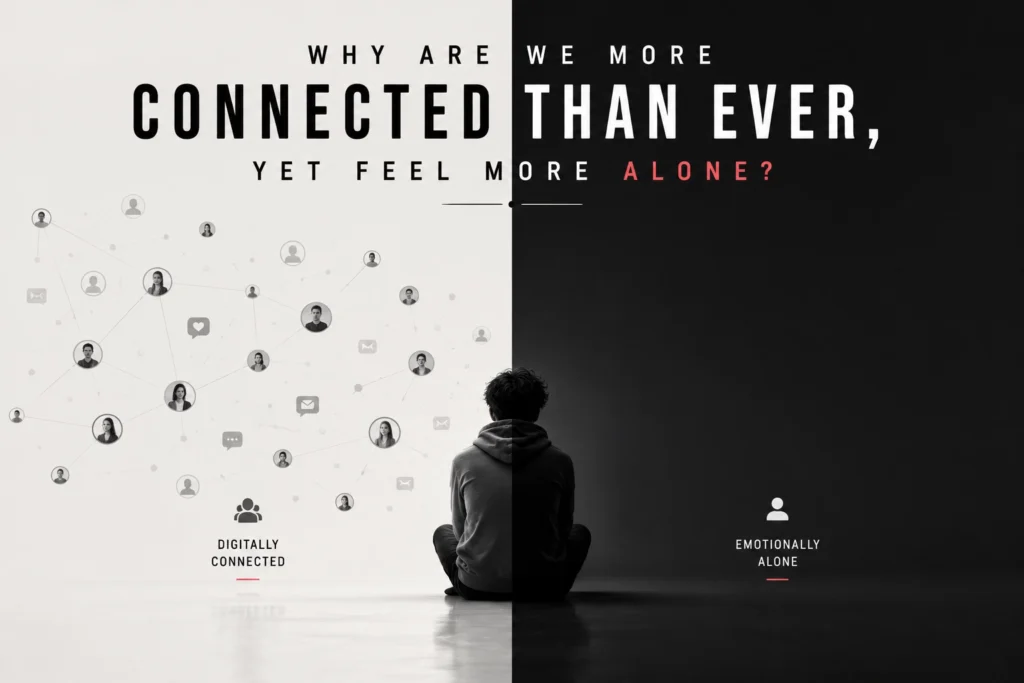
Why We’re More Alone Than Ever, But More Connected Than Ever: The Loneliness Paradox of the Digital Age

A World That Never Stops Talking At no point in history has staying in touch been so effortless. Messages travel across continents within moments, video calls connect people separated by thousands of miles, and social media allows individuals to remain in contact with vast networks of hundreds or even thousands of others. Advances in technology have dismantled many of the obstacles that once made communication slow, difficult, and costly. Yet despite this unprecedented level of connectivity, loneliness has emerged as a defining feature of modern life. Research conducted across various countries points to a consistent rise in feelings of emotional isolation, particularly among young adults and older populations. This raises an important paradox: if people today are more connected than ever before, why do so many still feel profoundly alone? The Great Connectivity Revolution The rise of the digital age has transformed the way people build and maintain relationships. Platforms like social media, messaging apps, and online forums have created opportunities that previous generations could hardly have imagined. Individuals can reconnect with friends from the past, discover others who share their passions, and remain close to family regardless of geographic distance. Beyond this, technology has lowered the barriers to maintaining relationships. A simple text can convey that someone is being thought of. Video calls can bridge physical gaps, and online communities can offer support to those who might otherwise struggle with isolation. In these ways, digital tools have undeniably improved many aspects of how people connect with one another. That said, ease of access doesn’t necessarily translate into emotional depth. Being able to reach more people doesn’t guarantee that the relationships formed will be meaningful or strong. The Difference Between Connection and Relationship A common mistake people make is equating communication with genuine connection. Actions like sending a text, liking a photo, or reacting to a post generate engagement, but they don’t necessarily foster emotional closeness. Real relationships depend on trust, openness, and substantive conversations that extend well beyond quick exchanges. Additionally, strong relationships are built on shared experiences and genuine emotional engagement. Someone can have a massive following and still experience profound loneliness, since true fulfillment comes from the depth of connection rather than the number of contacts. As a result, many people find themselves engaged in constant digital communication while still lacking real, authentic human bonds. This difference matters greatly. Digital connectivity simply means being able to reach others. True connection means feeling seen, appreciated, and emotionally supported. Social Media and the Illusion of Togetherness Social media has fostered a environment where people seem perpetually surrounded by friendships, celebrations, and thrilling moments. Users tend to post selectively chosen highlights that showcase happiness, achievement, and social engagement. This often gives the false impression that everyone else is leading a rich, socially fulfilling life. Yet these polished portrayals can actually deepen feelings of loneliness. People often measure their own ordinary, everyday lives against the highlight reels others present online. As a result, they may come to feel more isolated or less accomplished compared to those around them. In addition, interactions on social media tend to stay surface-level. Someone might rack up hundreds of likes on a single post, yet still have no one to turn to when facing a tough situation. This shows that being popular online doesn’t necessarily equate to having real, meaningful companionship. The Rise of Shallow Communication Today’s communication tends to place a premium on speed and ease. Tools like text messages, emojis, and short-form videos enable instant exchanges of information. Though efficient, these methods often leave less room for more substantial, in-depth conversations. Truly meaningful relationships are formed through lengthy discussions, emotional honesty, and genuine attentiveness. Unfortunately, digital communication often favors fast replies over thoughtful, considered engagement. This means people may be communicating more often while actually understanding one another less. Additionally, conversations today must compete with a constant stream of digital distractions. Notifications, emails, and endless content feeds pull attention in multiple directions, diminishing the quality of interactions. People may be physically together while mentally absorbed elsewhere, leading to relationships that feel increasingly disconnected and fragmented. Why Loneliness Persists in an Online World Loneliness isn’t merely about being physically alone. Rather, it stems from a lack of meaningful emotional bonds. Someone can go to social events, take part in group chats, and keep up an active online presence, yet still experience deep-seated loneliness. Additionally, contemporary lifestyles often make it hard to maintain close relationships. Demanding work schedules, frequent moves, and a growing emphasis on individualism can erode community ties. As a result, many people find it challenging to build relationships that are both lasting and emotionally fulfilling. The digital realm can sometimes worsen this issue. While online interactions may offer momentary comfort, they often fall short of meeting the deeper human need for true belonging and emotional intimacy. The Disappearing Art of Meaningful Conversation Genuine, meaningful conversation has grown scarce. Although many people communicate throughout their day, few of these exchanges involve discussions that carry real significance. Information gets shared, but fears, aspirations, doubts, and personal experiences are rarely voiced. Nevertheless, meaningful conversations play a vital role in fostering emotional connection. They give people a sense of being truly seen, heard, and understood. Deeper bonds form when individuals move past superficial exchanges and engage in candid, vulnerable dialogue. Additionally, meaningful conversations demand both time and focused attention. In a society that prizes productivity and nonstop activity, many struggle to make room for these kinds of interactions. As a consequence, relationships risk becoming merely practical rather than genuinely intimate. Communities in the Age of Individualism Throughout much of history, communities served as a cornerstone of human existence. Families resided near one another, neighbors were familiar with each other, and social life often unfolded within shared local spaces. These communities offered a sense of support, belonging, and emotional stability. In contrast, many traditional community structures have eroded today. Frequent relocation, remote work, and growing time spent online mean people often have fewer chances to form strong
curious
Uncategorized

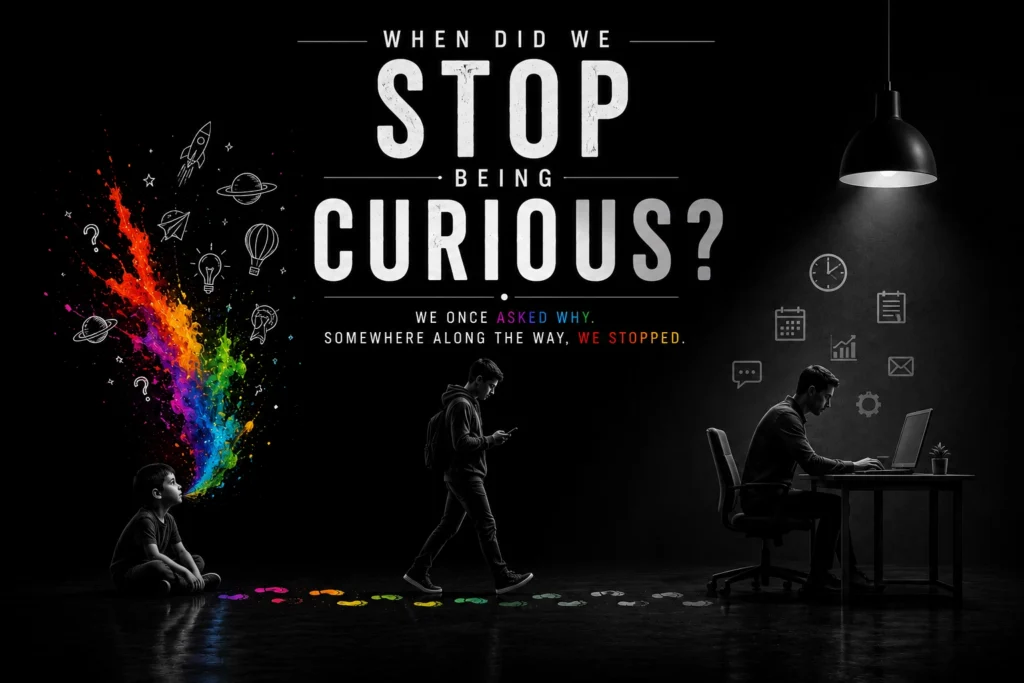
When Did We Stop Being Curious? The Quiet Disappearance of Wonder in the Modern World.

Born to Ask Questions A child’s natural curiosity can transform an ordinary day into a nonstop series of questions. Why is the sky blue? How do birds manage to fly? Where do the stars go during daylight hours? Children instinctively approach the world with a sense of wonder and amazement. They aren’t afraid to ask questions, since they view anything unfamiliar as a chance to learn something new. Curiosity ranks among humanity’s oldest and most powerful instincts. It compels children to explore, experiment, and make sense of the world around them. Even more importantly, it teaches them that knowledge isn’t something merely handed to them—it’s something to actively seek out. Yet as people age, many gradually stop asking questions. The sense of wonder that once made the world feel enchanting starts to diminish, and curiosity often turns into a forgotten habit rather than remaining a natural part of everyday life. The Slow Decline of Wonder Curiosity rarely fades all at once. Instead, it diminishes slowly, worn down by countless small, everyday experiences. As adults take on responsibilities, careers, and routines, they naturally have less time to explore new ideas and more time devoted to handling daily obligations. Additionally, society tends to value certainty over curiosity. People are often admired for having answers rather than for asking thoughtful questions. This leads many to conclude that curiosity is something reserved for childhood rather than a skill worth carrying through life. As a result, they stop questioning the world around them and simply begin accepting it at face value. When Education Prioritizes Answers Over Questions While education has the power to cultivate curiosity, many educational systems end up stifling it instead, often without meaning to. Schools tend to focus heavily on memorization, testing, and standardized results, teaching students to hunt for the single correct answer rather than explore a range of possibilities. What’s more, many classrooms reward speed and certainty over experimentation and genuine inquiry. A student who asks numerous questions might even be seen as disruptive or off-task. Over time, young learners come to understand that success is often about producing quick answers rather than engaging in deep thinking. As this pattern continues, curiosity takes a back seat to performance, and learning shifts from a process of discovering meaning to one of simply accumulating information. Society’s Expectations and the Fear of Looking Ignorant As individuals grow into adulthood, social expectations start to influence how they act. Adults are frequently expected to project knowledge, competence, and confidence. As a result, many avoid asking questions altogether, worried that doing so might make them seem uninformed or inexperienced. This fear builds an invisible wall against learning. People often shy away from exploring unfamiliar topics because expressing curiosity can feel like admitting a lack of knowledge. Yet real learning demands humility. Every major discovery starts with someone willing to say, “I don’t know this yet—can I find out more?” Unfortunately, modern society tends to reward confident certainty while overlooking the courage it takes to stay curious. The Comfort of Routine Routine offers a sense of stability and efficiency, helping people manage their responsibilities while cutting down on unnecessary stress. However, routines can also become a kind of intellectual trap. When each day mirrors the last, chances for exploration steadily shrink. Furthermore, familiarity can create the false impression that nothing new remains to be discovered. Adults tend to frequent the same places, carry out the same tasks, and have the same conversations repeatedly. As a result, they stop noticing the many small mysteries woven into everyday life. Curiosity thrives on novelty, and too much routine can quietly replace a sense of wonder with mere predictability. Digital Distractions and the Death of Deep Curiosity Technology has given humanity unmatched access to information, with answers to nearly any question available within seconds. Ironically, this overwhelming abundance of information hasn’t necessarily made people more curious. Instead, digital platforms often promote passive consumption rather than active exploration. Social media feeds continuously deliver entertainment, opinions, and pre-packaged explanations. As a result, people find themselves spending less time wondering and more time simply scrolling. The internet has become a space where answers arrive almost before questions have a chance to form. Additionally, having instant access to information can create a false sense of being knowledgeable. Skimming a headline or watching a brief video might feel like learning, but genuine curiosity calls for deeper engagement. It requires patience, real investigation, and a willingness to sit with uncertainty for a while. Unfortunately, today’s digital culture often works against these very qualities. Why Curiosity Matters More Than Ever Curiosity is far from a minor trait — it forms the very foundation of creativity, innovation, and progress. Every scientific breakthrough, technological leap, and artistic achievement started with someone daring to ask a question that others had overlooked. Time and again, history has shown the transformative power of curiosity. Explorers set sail across oceans, driven by wonder about what lay beyond the horizon. Scientists reshaped the field of medicine by challenging long-held assumptions. Inventors revolutionized entire industries by envisioning possibilities that didn’t yet exist. Curiosity, then, is more than just an intellectual habit — it stands as one of the most powerful forces driving human progress. The Link Between Curiosity and Personal Growth Curiosity’s impact extends beyond advancing society as a whole — it also transforms individuals on a personal level. Curious people consistently pursue new experiences, viewpoints, and knowledge. This makes them more adaptable to change and helps them develop a deeper understanding of both themselves and the world they live in. Curiosity also fosters empathy. By asking questions about different cultures, beliefs, and life experiences, people become better able to appreciate viewpoints beyond their own. On the other hand, a lack of curiosity tends to result in narrow-mindedness and resistance to change. Genuine personal growth begins when people choose to explore rather than assume, and to question rather than settle for certainty. Have We Become Too Comfortable? Modern life tends to prioritize comfort and convenience.

black and white
Uncategorized

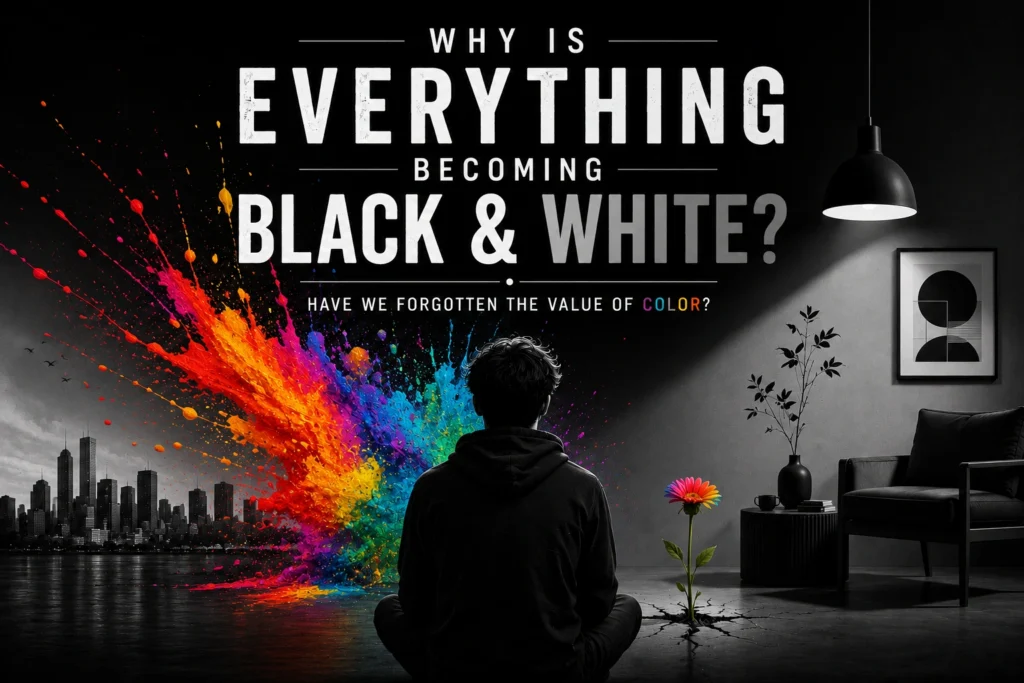
Why Is Everything Becoming Black and White? Have We Forgotten the Language of Color?

A World Once Painted in Color Take a look through old photographs, vintage advertisements, or traditional markets, and one thing immediately becomes clear: color used to be everywhere. People wore vibrant clothing, filled their homes with bold patterns, and created products that celebrated individuality and emotional expression. Color wasn’t just decoration — it reflected culture, identity, and a sense of joy. Today’s world, though, looks quite different. Contemporary apartments lean toward white walls and beige furnishings. Tech companies release their products predominantly in black, silver, and gray. Fashion trends center around monochrome looks and neutral tones. As a result, many have begun to question whether society has gradually lost its love for color. The Rise of Minimalism and Monochrome Over the past ten years, minimalism has evolved from being just a design approach into a full-fledged cultural movement. It promotes owning fewer things, eliminating distractions, and finding value in simplicity. Consequently, black, white, and neutral tones have come to define the visual style of contemporary living. Minimalism also tends to link clean, uncluttered spaces with productivity and sophistication. Designers gravitate toward monochrome palettes because they evoke a sense of order and calm, while brands adopt this aesthetic since simple colors convey elegance and timelessness. In this way, monochrome has come to represent modernity itself, rather than being just another stylistic preference. Why Do We Associate Black and White with Sophistication? Psychology plays a major role in why people gravitate toward monochrome aesthetics. Black is often linked to power, luxury, and authority, while white conveys cleanliness, simplicity, and perfection. Combined, these two colors project an image of professionalism and refinement. Society continually reinforces these associations as well. Luxury vehicles are commonly seen in black or white. Corporate offices often adopt neutral color schemes to project seriousness and efficiency. High-end fashion labels lean heavily on monochrome branding. Over time, this leads people to unconsciously associate colorful designs with being less professional, or even less mature. Brands Have Quietly Abandoned Color A clear shift has taken place in branding over the past several years. Numerous companies have streamlined their logos, stripping away vibrant elements from their visual identities. Businesses now often favor black-and-white logos, viewing them as more modern, adaptable, and premium. However, this shift has also led to a certain sameness across brands. When many companies follow the same minimalist design principles, they start to blend together and look strikingly alike. While this approach brings consistency and elegance, it frequently comes at the cost of individuality and emotional resonance. In other words, companies may gain a polished sophistication, but lose part of what made them distinct. The Neutral Home: Comfort or Sterility? Interior design has undergone a similar transformation. Social media is filled with images of homes featuring white walls, beige sofas, gray kitchens, and wooden accents. These spaces come across as clean, well-organized, and visually appealing. Still, an important question lingers: do these spaces genuinely feel alive? Color has a unique ability to stir emotion, trigger memories, and add warmth to a space. A vividly colored living room can feel inviting and full of energy, whereas a completely neutral space can sometimes come across as cold or impersonal. In striving for visual perfection, we may have inadvertently created homes that look stunning but lack real emotional depth. Fashion’s Love Affair with Monochrome Fashion trends further reflect society’s increasing preference for neutral shades. Black clothing continues to dominate wardrobes thanks to its versatility and timeless appeal. White and beige pieces suggest elegance and simplicity. As a result, many view monochrome fashion as a safer, more refined choice. Yet clothing has traditionally served as a powerful means of self-expression. Bold, vibrant colors often signal confidence, creativity, and cultural identity. By increasingly gravitating toward neutral tones, people may be unintentionally limiting their chances to express who they really are. In this way, fashion shifts from being a form of storytelling to becoming more about fitting in. Technology and the Aesthetic of Simplicity Tech companies have played a major role in shaping modern design trends. Smartphones, laptops, and smart devices are frequently released in black, silver, gray, and white. Manufacturers deliberately choose these colors because they convey a premium feel and appeal to a wide range of users. Digital interfaces have similarly embraced minimalism. Websites and apps often feature streamlined layouts with restricted color schemes, an approach that boosts usability and cuts down on distractions. That said, too much simplicity can leave digital experiences feeling emotionally flat. In gaining efficiency, technology has, in some ways, lost a bit of its playfulness and expressive character. Social Media and the Pursuit of the Perfect Feed Social media has played a major role in accelerating the rise of monochrome aesthetics. Influencers carefully craft their feeds using neutral tones and cohesive themes. As these visuals gain traction, they set new benchmarks for what’s considered beautiful and sophisticated. As a result, users often feel pressure to match these same aesthetic standards. Bright, colorful styles can start to seem less fashionable by comparison. Over time, algorithms favor certain visual trends, prompting millions to adopt the same muted color schemes. In this sense, social media doesn’t just mirror cultural trends — it actively drives and reshapes them. What We Lose When Color Disappears Color has a profound impact on human emotions. Vibrant hues can spark creativity, boost energy levels, and deepen emotional bonds. Across cultures, colors also carry rich symbolic meaning, playing a central role in celebrations, traditions, and significant life milestones. As society leans further into monochrome aesthetics, it risks losing touch with some of these emotional experiences. A world dominated by black, white, and gray may come across as efficient and refined, but it can also feel less joyful and less human. Creativity tends to flourish in environments that embrace diversity, and color stands as one of the most powerful expressions of that diversity. Have We Mistaken Simplicity for Beauty? There’s no denying that simplicity has real value — minimalist design can cut down on visual clutter and foster

Scroll to Top