Uncategorized

Why Are We More Connected Than Ever, Yet Feel More Alone? The Loneliness Paradox of the Digital Age

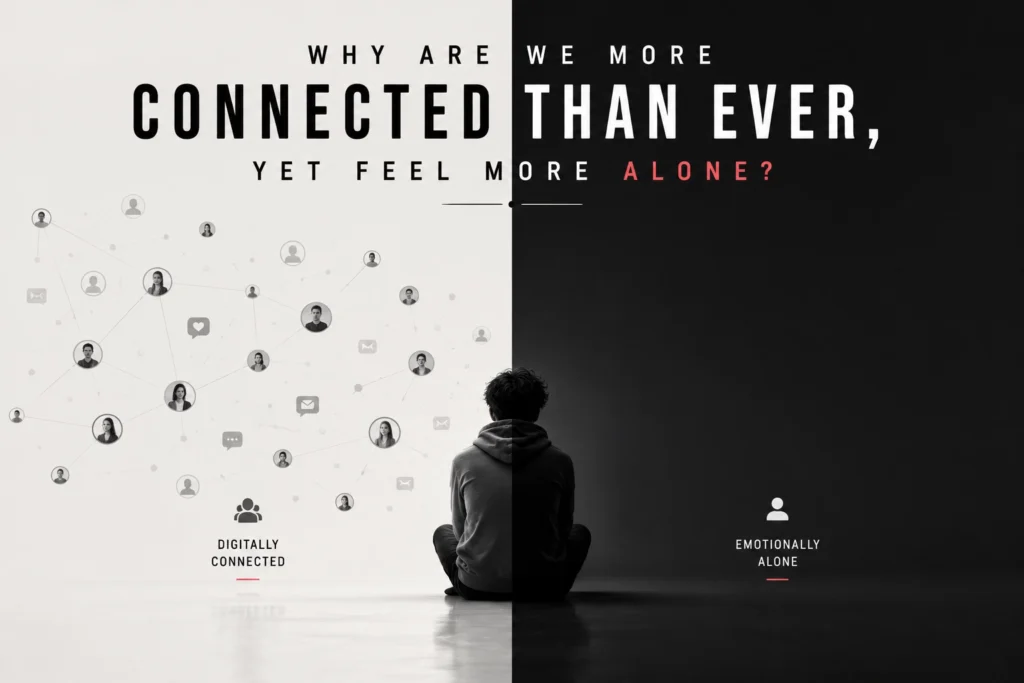
A World That Never Stops Talking Never in human history has communication been this easy. A person can send a message across continents in seconds, participate in video calls with people thousands of miles away, and maintain contact with hundreds or even thousands of individuals through social media platforms. Technology has removed many of the barriers that once made communication difficult and expensive. Yet, despite this extraordinary level of connectivity, loneliness has become one of the defining experiences of modern life. Reports from various countries continue to show rising levels of emotional isolation, particularly among young adults and older generations. Consequently, an important question emerges: if we are more connected than ever before, why do so many people feel so alone? The Great Connectivity Revolution The digital revolution transformed the way people build and maintain relationships. Social media platforms, instant messaging applications, and online communities have created opportunities that previous generations could hardly imagine. People can reconnect with old friends, meet individuals who share their interests, and remain in constant communication with family members regardless of distance. Furthermore, technology has made relationships more accessible. A simple notification can remind someone that another person is thinking about them. Video calls can bridge geographical gaps, and online communities can offer support to people who might otherwise feel isolated. Therefore, digital technology has undoubtedly improved many aspects of human communication. However, accessibility does not automatically create emotional closeness. The ability to reach more people does not necessarily guarantee deeper or more meaningful relationships. The Difference Between Connection and Relationship Many people confuse communication with connection. Sending a message, liking a photograph, or reacting to a post creates interaction, but it does not always create emotional intimacy. Genuine relationships require trust, vulnerability, and meaningful conversations that go beyond brief exchanges. Moreover, relationships thrive on shared experiences and emotional presence. A person can have thousands of followers and still feel deeply lonely because emotional fulfillment depends on quality rather than quantity. Consequently, many individuals discover that they are surrounded by digital interactions yet deprived of authentic human connection. This distinction is crucial. Being digitally connected means having access to people. Being genuinely connected means feeling understood, valued, and emotionally supported. Social Media and the Illusion of Togetherness Social media platforms have created an environment where everyone appears constantly surrounded by friends, celebrations, and exciting experiences. Users share carefully selected moments that portray happiness, success, and connection. As a result, social media often creates the illusion that everyone else is living a fulfilling and socially rich life. However, these curated images can intensify feelings of loneliness. People frequently compare their everyday experiences with the highlights of others’ lives. Consequently, they may believe that they are more isolated or less successful than everyone around them. Furthermore, social media interactions often remain superficial. A person may receive hundreds of likes on a post yet still lack someone to call during a difficult moment. Therefore, online popularity and genuine companionship are not necessarily the same thing. The Rise of Shallow Communication Modern communication increasingly prioritizes speed and convenience. Text messages, emojis, and short videos allow people to exchange information instantly. While these tools are efficient, they often reduce opportunities for deeper conversations. Meaningful relationships develop through extended discussions, emotional openness, and attentive listening. Unfortunately, digital communication frequently encourages quick responses rather than thoughtful engagement. Consequently, people may communicate more frequently while understanding each other less deeply. In addition, many conversations now compete with countless digital distractions. Notifications, emails, and endless streams of content divide attention and reduce the quality of interactions. People may be physically present yet mentally elsewhere, creating relationships that feel increasingly fragmented. Why Loneliness Persists in an Online World Loneliness is not simply the absence of people. Instead, it is the absence of meaningful emotional connection. A person can attend social gatherings, participate in group chats, and maintain an active online presence while still experiencing profound loneliness. Moreover, modern lifestyles often make deep relationships difficult to sustain. Busy work schedules, frequent relocation, and increasing individualism can weaken community bonds. Consequently, many people struggle to develop long-lasting and emotionally supportive relationships. The digital world sometimes amplifies this challenge. Online interactions can provide temporary comfort, yet they may fail to satisfy the fundamental human need for genuine belonging and emotional closeness. The Disappearing Art of Meaningful Conversation Meaningful conversation has become increasingly rare. Many people communicate throughout the day without engaging in discussions that truly matter. They exchange information, but they rarely share fears, dreams, doubts, or personal experiences. However, meaningful conversations are essential for emotional connection. They allow people to feel seen, heard, and understood. Deep relationships develop when individuals move beyond surface-level interactions and engage in honest and vulnerable dialogue. Furthermore, meaningful conversations require time and attention. In a culture that celebrates productivity and constant activity, many individuals struggle to create space for these interactions. Consequently, relationships may become functional rather than deeply personal. Communities in the Age of Individualism Throughout history, communities played a central role in human life. Families lived close together, neighbors knew one another, and social activities often occurred within shared physical spaces. These communities provided support, belonging, and emotional security. Today, however, many traditional communities have weakened. People move frequently, work remotely, and spend increasing amounts of time online. Consequently, they may have fewer opportunities to build strong local relationships. Digital communities certainly provide valuable connections, especially for individuals with shared interests or experiences. Nevertheless, online groups cannot always replace the emotional richness of face-to-face interactions. Human beings thrive when they experience both connection and presence. The Human Need for Authentic Relationships Humans are inherently social creatures. Emotional well-being depends not merely on interaction but on authentic relationships characterized by trust, empathy, and mutual support. Authentic relationships require effort and intentionality. They involve listening without distraction, showing genuine interest, and being emotionally available during difficult moments. These qualities cannot be fully replicated by notifications or brief online interactions. Moreover, authentic relationships often emerge from ordinary moments—sharing a meal, taking a

Uncategorized

When Did We Stop Being Curious? The Quiet Disappearance of Wonder in the Modern World.

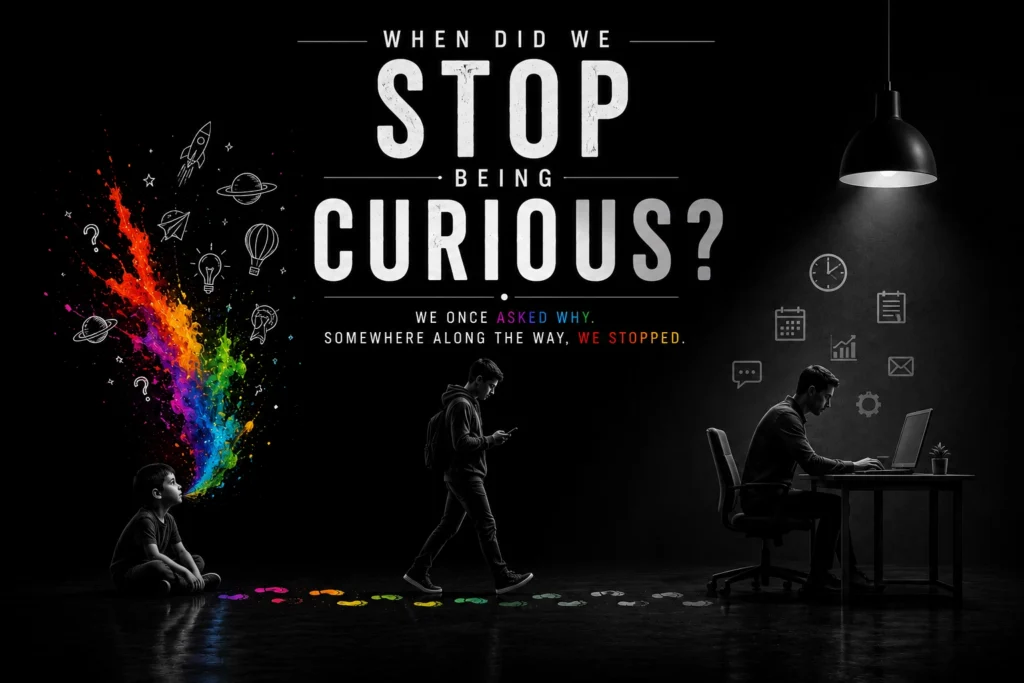
Born to Ask Questions A child can turn an ordinary day into an endless stream of questions. Why is the sky blue? How do birds fly? What happens to the stars during the daytime? Children naturally approach the world with fascination and wonder. They do not fear asking questions because they see every unfamiliar thing as an invitation to learn. Curiosity is one of humanity’s earliest and most powerful instincts. It drives children to explore, experiment, and understand their surroundings. More importantly, it teaches them that knowledge is not simply something to receive but something to pursue. However, as people grow older, many of them slowly stop asking questions. The sense of wonder that once made the world feel magical begins to fade, and curiosity often becomes a forgotten habit rather than a natural way of living. The Slow Decline of Wonder The loss of curiosity rarely happens overnight. Instead, it disappears gradually through countless small experiences. Adults become busy with responsibilities, careers, and routines. Consequently, they spend less time exploring new ideas and more time managing daily obligations. Moreover, society often praises certainty more than curiosity. People admire those who have answers, not necessarily those who ask thoughtful questions. As a result, many individuals begin to believe that curiosity is a trait of childhood rather than a lifelong skill. They stop wondering about the world and start accepting it exactly as it appears. When Education Prioritizes Answers Over Questions Education has the potential to nurture curiosity, yet many educational systems unintentionally suppress it. Schools frequently emphasize memorization, examinations, and standardized outcomes. Students learn to search for the correct answer instead of exploring multiple possibilities. Furthermore, many classrooms reward certainty and efficiency rather than experimentation and inquiry. A student who asks too many questions may even appear disruptive or unfocused. Consequently, young minds gradually learn that success often means producing answers quickly rather than thinking deeply. Over time, curiosity becomes secondary to performance, and learning transforms into a process of collecting information rather than discovering meaning. Society’s Expectations and the Fear of Looking Ignorant As people mature, social expectations begin to shape their behavior. Adults are often expected to appear knowledgeable, competent, and confident. Therefore, many individuals avoid asking questions because they fear appearing uninformed or inexperienced. This fear creates an invisible barrier to learning. People hesitate to explore unfamiliar subjects because admitting curiosity sometimes feels like admitting ignorance. However, genuine learning requires humility. Every significant discovery begins with the willingness to ask, “I do not know. Can I learn more?” Unfortunately, modern society frequently rewards certainty while undervaluing the courage to remain curious. The Comfort of Routine Routine provides stability and efficiency. It helps people manage responsibilities and reduces unnecessary stress. However, routines can also become intellectual cages. When every day follows the same pattern, opportunities for exploration gradually diminish. In addition, familiarity often creates an illusion that there is nothing new to discover. Adults visit the same places, perform the same tasks, and engage in the same conversations. Consequently, they stop noticing the countless mysteries hidden in ordinary life. Curiosity requires novelty, and excessive routine can quietly replace wonder with predictability. Digital Distractions and the Death of Deep Curiosity Technology has given humanity unprecedented access to information. Answers to almost any question are available within seconds. Ironically, this abundance of information has not necessarily made people more curious. Instead, digital platforms often encourage passive consumption rather than active exploration. Social media feeds constantly provide entertainment, opinions, and ready-made explanations. Consequently, people spend less time wondering and more time scrolling. The internet has become a place where answers arrive before questions even form. Moreover, instant access to information can create the illusion of knowledge. Reading a headline or watching a short video may feel educational, but genuine curiosity demands deeper engagement. It requires patience, investigation, and the willingness to remain uncertain for a while. Unfortunately, modern digital culture often discourages these very qualities. Why Curiosity Matters More Than Ever Curiosity is not a trivial characteristic. It is the foundation of creativity, innovation, and progress. Every scientific breakthrough, technological advancement, and artistic masterpiece began with someone asking a question that others ignored. History repeatedly demonstrates the power of curiosity. Explorers crossed oceans because they wondered what existed beyond the horizon. Scientists transformed medicine because they questioned accepted beliefs. Inventors changed industries because they imagined possibilities that did not yet exist. Therefore, curiosity is not merely an intellectual habit; it is one of humanity’s greatest driving forces. The Link Between Curiosity and Personal Growth Curiosity does more than advance society. It also transforms individuals. Curious people continuously seek new experiences, perspectives, and knowledge. Consequently, they adapt more easily to change and develop a richer understanding of themselves and the world around them. Furthermore, curiosity encourages empathy. Asking questions about different cultures, beliefs, and experiences allows people to appreciate perspectives beyond their own. In contrast, a lack of curiosity often leads to narrow thinking and resistance to change. Personal growth begins when individuals choose exploration over assumption and questions over certainty. Have We Become Too Comfortable? Modern life often encourages comfort and convenience. Technology simplifies tasks, routines create predictability, and algorithms provide personalized experiences. While these developments offer many benefits, they can also reduce opportunities for discovery. When every preference is anticipated and every need is instantly satisfied, the motivation to explore may weaken. People become increasingly comfortable with what they already know. Consequently, they may stop seeking new experiences or challenging existing beliefs. The danger is not ignorance itself but the gradual loss of interest in learning something new. Rediscovering the Child Within Children remind adults of an important truth: curiosity is not something that disappears naturally. Instead, it is something that people often neglect. The ability to ask questions remains within everyone, waiting to be awakened again. Rediscovering curiosity does not require extraordinary adventures. It can begin with simple actions. Read a book outside your usual interests. Learn a new skill. Visit an unfamiliar place. Ask why something works

Uncategorized

Why Is Everything Becoming Black and White? Have We Forgotten the Language of Color?

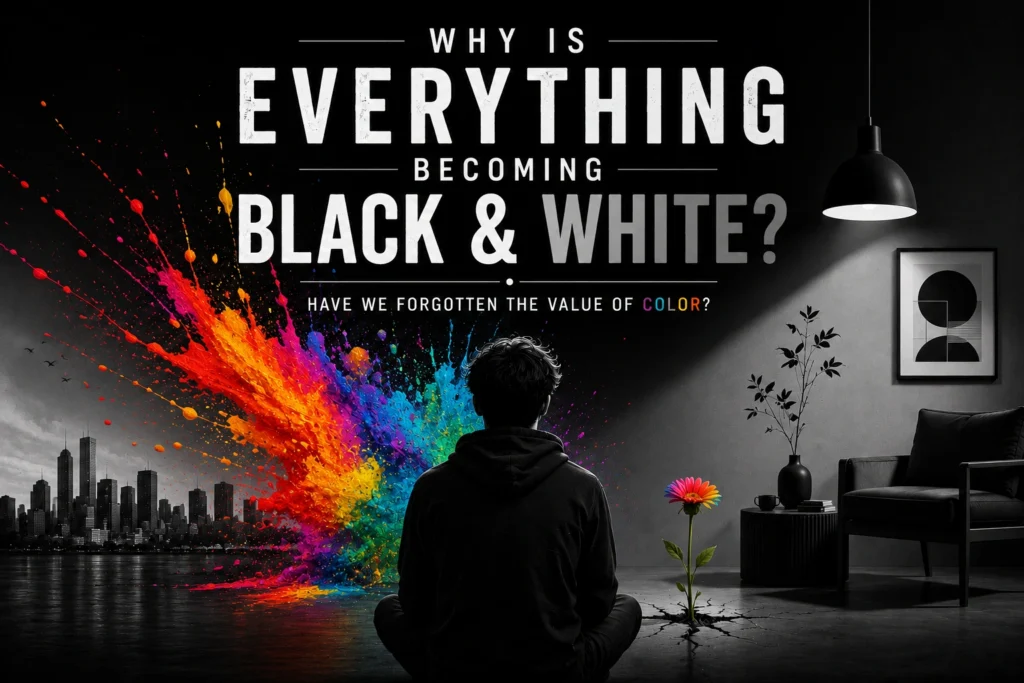
A World Once Painted in Color Walk through old photographs, vintage advertisements, or traditional markets, and one detail immediately stands out: color was everywhere. People embraced vibrant clothing, decorated their homes with bold patterns, and designed products that celebrated individuality and emotion. Colors were not merely decorative elements; they were expressions of culture, identity, and joy. Today, however, the landscape looks remarkably different. Modern apartments favor white walls and beige furniture. Technology companies release products in black, silver, and gray. Fashion trends revolve around monochrome outfits and neutral palettes. Consequently, many people have started to wonder whether society has slowly fallen out of love with color. The Rise of Minimalism and Monochrome Over the last decade, minimalism has transformed from a design philosophy into a cultural movement. It encourages people to own fewer possessions, remove distractions, and appreciate simplicity. As a result, black, white, and neutral shades have become the visual language of modern living. Furthermore, minimalism often associates clean and uncluttered spaces with productivity and sophistication. Designers use monochrome palettes because they create a sense of order and calm. Brands also embrace this trend because simple colors communicate elegance and timelessness. Therefore, monochrome has become a symbol of modernity rather than merely a design choice. Why Do We Associate Black and White with Sophistication? Psychology plays a significant role in our preference for monochrome aesthetics. Black often represents power, luxury, and authority, while white symbolizes cleanliness, simplicity, and perfection. Together, these colors create an image of professionalism and refinement. Moreover, society continuously reinforces these associations. Luxury cars frequently appear in black or white. Corporate offices adopt neutral color schemes to appear serious and efficient. High-end fashion brands rely heavily on monochrome branding. Consequently, people subconsciously begin to believe that colorful designs are less professional or even less mature. Brands Have Quietly Abandoned Color A noticeable shift has occurred in branding over recent years. Many companies have simplified their logos and removed vibrant elements from their visual identities. Businesses increasingly prefer black-and-white logos because they appear modern, versatile, and premium. However, this transformation has also created a certain uniformity. When numerous brands adopt the same aesthetic principles, they begin to look remarkably similar. While minimalism offers consistency and elegance, it often sacrifices uniqueness and emotional connection. Therefore, companies may gain sophistication but lose a part of their personality. The Neutral Home: Comfort or Sterility? Interior design has experienced a similar evolution. Social media platforms showcase homes filled with white walls, beige couches, gray kitchens, and wooden accents. These spaces appear clean, organized, and visually pleasing. Nevertheless, one important question remains: do these environments truly feel alive? Color has the power to stimulate emotions, evoke memories, and create warmth. A brightly colored living room can feel welcoming and energetic, while an entirely neutral space may sometimes feel distant or impersonal. In our pursuit of perfection, we may have unintentionally created homes that look beautiful but lack emotional depth. Fashion’s Love Affair with Monochrome Fashion trends also demonstrate society’s growing preference for neutral tones. Black outfits dominate wardrobes because they are versatile and timeless. White and beige clothing convey elegance and simplicity. Consequently, many people consider monochrome fashion a safer and more sophisticated choice. However, clothing has historically served as a form of self-expression. Vibrant colors often communicate confidence, creativity, and cultural identity. By increasingly choosing neutral tones, individuals may unknowingly suppress opportunities to express their personalities. Fashion becomes less about storytelling and more about conformity. Technology and the Aesthetic of Simplicity Technology companies have significantly influenced modern design preferences. Smartphones, laptops, and smart devices frequently appear in black, silver, gray, and white. Manufacturers intentionally use these colors because they look premium and appeal to a broad audience. Additionally, digital interfaces have embraced simplicity. Websites and applications often feature clean layouts with limited color palettes. This approach improves usability and reduces distractions. Nevertheless, excessive simplicity can also make digital experiences feel emotionally sterile. Technology has become more efficient, but it has also become less playful and expressive. Social Media and the Pursuit of the Perfect Feed Social media has accelerated the popularity of monochrome aesthetics. Influencers carefully curate their feeds using neutral colors and consistent themes. As these images gain popularity, they establish new standards for beauty and sophistication. Consequently, users often feel pressured to adopt similar aesthetics. Bright and colorful expressions may appear less fashionable in comparison. Over time, algorithms reward certain visual styles, encouraging millions of people to imitate the same muted tones. Therefore, social media not only reflects cultural trends but actively shapes them. What We Lose When Color Disappears Color affects human emotions in profound ways. Bright shades can inspire creativity, increase energy, and strengthen emotional connections. Different cultures also attach deep meanings to colors, using them to celebrate traditions, festivals, and important life events. When society increasingly embraces monochrome aesthetics, it risks losing some of these emotional experiences. A world dominated by black, white, and gray can feel efficient and sophisticated, yet it may also feel less joyful and less human. Creativity often thrives in environments that encourage diversity, and color is one of the most powerful forms of diversity. Have We Mistaken Simplicity for Beauty? Simplicity undoubtedly has value. Minimalist design can reduce visual noise and create a sense of calm. However, simplicity should not require the complete rejection of color. Beauty exists in balance, not in extremes. In many ways, society has equated monochrome aesthetics with intelligence, professionalism, and status. Consequently, people sometimes avoid colorful choices because they fear appearing childish or outdated. Yet color and sophistication do not have to exist in opposition. A vibrant world can still be elegant, modern, and refined. Rediscovering the Value of Color Perhaps the world has not stopped loving color at all. Instead, we may have simply forgotten its value. Color remains deeply connected to memory, emotion, and identity. Festivals, sunsets, flowers, and works of art continue to move us precisely because they are filled with rich and meaningful colors. Therefore, the challenge is not to reject

Scroll to Top